WHERE HERITAGE MEETS RAMBO LEATHER MODERN CRAFTSMANSHIP
WHERE HERITAGE MEETS RAMBO LEATHER MODERN CRAFTSMANSHIP

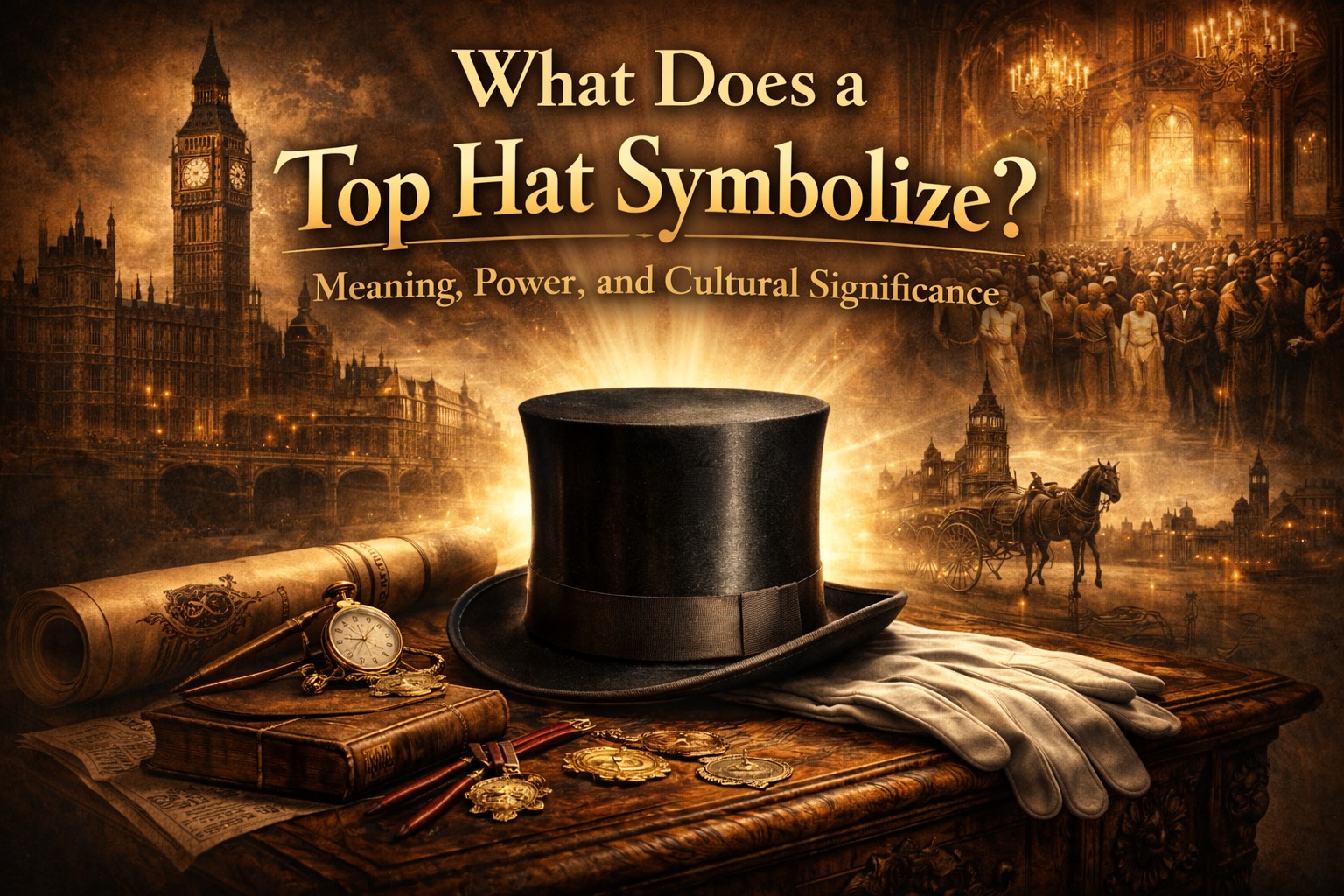
Most fashion follows trends. The top hat communicates intention. Its tall cylindrical crown was never purely decorative it was engineered to create visual dominance. Humans instinctively read height and structure as signals of control and authority. A vertical silhouette draws the eye upward, subtly increasing perceived stature, while rigid symmetry communicates composure and discipline. Public figures understood this visual language. The recognizable stovepipe worn by Abraham Lincoln reinforced presence and leadership in an era when symbolism shaped public perception as strongly as rhetoric.
The top hat still commands attention because its design communicates meaning instantly, even when removed from its original historical context.
When top hats emerged as elite fashion, they functioned as markers of social separation. Their cost, materials, and impracticality for physical labor signaled that the wearer occupied a position above everyday work. Over time, this association became shorthand for prosperity and influence.
By the Victorian period, the top hat had become embedded in ceremonial dress. It represented adherence to order, etiquette, and continuity with tradition. Even today, its silhouette communicates respect for formal occasions.
The structured crown defines personal space. By extending vertical presence, the hat distinguishes the wearer visually, reinforcing perceptions of leadership and confidence.
Stage performance culture added another layer of symbolism: transformation. The iconic image of Rich Uncle Penny bags from Monopoly merges wealth, theatricality, and power into one instantly recognizable form.
Together these meanings economic, ceremonial, psychological, and theatrical make the top hat one of the most symbolically dense items in Western fashion.


Many historic hats conveyed authority, but most derived meaning from institutional roles. The top hat communicates personal presence rather than organizational identity.
| Hat | Primary Association | What It Symbolizes | Context of Use | Why the Top Hat Communicates More Broadly |
|---|---|---|---|---|
| Top Hat | Social prestige and ceremonial authority | Personal status, refinement, presence | Formal dress, symbolic identity | Meaning understood without uniform or role |
| Shako Hat | Military discipline | Organized authority, regimented identity | Ceremonial military uniform | Authority tied to institution, not individual |
| WW1 Prussian Death’s Head Hussar Busby | Elite cavalry tradition | Historical honor, unit identity | Specific historical regiment | Symbolism limited to one historical context |
| Civil War Kepi Cap | Rank hierarchy | Duty, command structure | Military setting | Meaning depends on role within system |
| Militaria Caps | Service affiliation | Institutional allegiance | Historical or ceremonial use | Significance varies by organization |
The distinction is essential: military hats communicate membership. The top hat communicates identity.
Symbolic objects endure when they remain useful for communication. The top hat continues to function as a deliberate visual signal where distinction matters.
Modern motivations include:
Formal attire marks importance and structure.
Heritage fashion uses historical forms to express individuality.
Public traditions such as the Kentucky Derby show how headwear still operates as social language.
Today, the top hat is chosen intentionally never accidentally.
A leather top hat suits individuals who want symbolic authority expressed through modern personality.
It resonates with those seeking:
For detailed styling guidance, see: How to Choose the Perfect Leather Top Hat for Your Outfit
A top hat’s symbolism is amplified or weakened by how it is worn. Styling determines whether the hat reads as ceremonial authority, personal distinction, or theatrical expression.
Because the top hat communicates discipline and control, it pairs most naturally with garments that share similar visual language.
Best pairings:
Loose or overly casual clothing weakens the symbolic message by introducing visual contradiction.
Clothing is read relative to environment. The same hat communicates different meanings depending on setting.
Matching context to symbolism ensures clarity of message.
Leather top hats create stronger visual texture than traditional felt versions. This allows them to function as statement pieces within modern styling.
Leather works especially well with:
The goal is cohesion the hat should feel intentional, not decorative.
A top hat draws attention upward. To maintain balance:
Visual hierarchy is essential. When everything demands attention, symbolism dissolves.
Symbolic clothing communicates through posture and movement as much as design.
Effective presence includes:
Because the top hat frames identity, the wearer completes the message.
Contemporary styling favors intentional simplicity over strict historical replication.
Guiding principles:
When styling aligns with symbolism, the top hat becomes a coherent expression rather than a costume.
The top hat’s lasting power comes from the interaction of form, history, and human perception.
Its form communicates immediately: height signals importance, structure signals control, symmetry signals intention. These cues operate subconsciously, which is why the symbol remains effective even outside historical context.
Its history gives it cultural memory. For generations, the hat appeared at moments of ceremony, leadership, and social significance. Objects repeatedly associated with importance accumulate meaning over time.
Most importantly, it expresses a universal desire: to be seen as intentional, composed, and distinct. Unlike institutional headwear, the top hat allows individuals to communicate presence without requiring rank or role.
The symbol endures because it still performs a function it communicates identity clearly and efficiently.
Explore the fascinating meaning behind the top hat! From royal courts to modern soirées, learn how this iconic accessory signifies elegance and influence in various cultures. Come along, and enrich your wardrobe with a touch of history!
No account yet?
Create an Account

