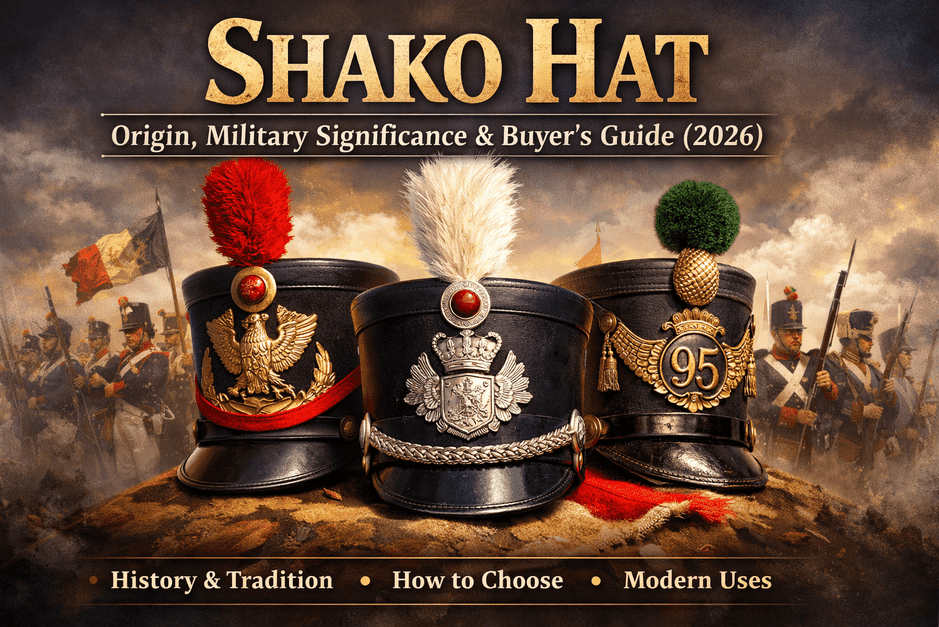
Among historical military headwear styles, structured designs like the leather shako hat became especially iconic during the Napoleonic era and remain popular for reenactment and historical costume use today.
Each militaria cap tells a story from Napoleonic command to 19th-century infantry service. Understanding these styles helps enthusiasts choose caps that align with historical accuracy, practical wear, and long-term collection value.This guide explores what militaria caps are, how to choose the right one, common styles to know, styling tips, and how different caps compare in real-world use.
How to Choose the Right Militaria Cap
Selecting a militaria cap involves more than visual appeal. Several practical and historical factors determine whether a cap truly fits your needs.
Era or Period Accuracy
Militaria caps are directly tied to specific time periods. A Napoleonic bicorn differs significantly from a Civil War kepi or a 19th-century shako in shape, structure, and symbolic meaning. Choosing a cap that accurately represents the intended era is essential for reenactments, historical displays, and theatrical authenticity.
Even minor inaccuracies in shape or detailing can reduce credibility, especially for educated audiences and collectors.
Use Case
Your intended use should guide your decision. Reenactors often prioritize strict historical accuracy and durability. Collectors may focus on craftsmanship, faithful reproduction, and long-term preservation. For theater and costume events, visual clarity and comfort may matter more than exact replication.
Understanding how and where the cap will be worn ensures better satisfaction over time.
Cap Structure
Militaria caps range from soft, lightweight designs to tall, rigid constructions. Kepis are typically flat-topped and flexible, while bicorns and shakos feature stronger shaping to maintain form. Structure influences how the cap sits on the head and how visually commanding it appears.
Structured caps often offer stronger presence, while softer designs provide ease of wear.
Comfort
Comfort becomes critical during long reenactments or events. Proper sizing, interior lining, weight distribution, and breathability all affect wearability. Modern reproductions often subtly improve comfort while preserving historical appearance.
A well-fitted cap reduces fatigue and enhances confidence during extended use.
Material
Materials define both authenticity and durability. Historically accurate materials such as wool, felt, leather, and cotton contribute to correct texture, appearance, and aging. Quality materials also help caps maintain shape and withstand repeated use.
How to Style Militaria Caps
Styling militaria caps successfully requires respect for their historical roots while adapting them to modern or event-based settings.
For reenactments, caps should be worn with era-appropriate uniforms, footwear, and accessories. Many styles are designed to sit at a specific angle or height, which can influence overall authenticity.
In theater and costume use, militaria caps often act as visual anchors. Even with simplified outfits, the right cap instantly communicates rank, nationality, and historical period to the audience.
Collectors often style militaria caps in display settings alongside uniforms, medals, or archival pieces. Proper storage and occasional reshaping help preserve structure and material integrity.
Some enthusiasts incorporate militaria caps into heritage-inspired outfits, pairing them with neutral clothing to allow the cap’s historical character to stand out without appearing theatrical.
Comparison, Pros & Cons, and When to Wear
Different militaria caps serve different purposes depending on era, comfort, and visual impact.
Airline Pilot Captain Uniform Visor Cap
This cap reflects modern officer and aviation traditions, offering a clean and authoritative appearance.
Pros:
- Structured and formal design
- Comfortable for extended wear
- Works well in ceremonial and aviation portrayals
Cons:
- Not suitable for early historical periods
- Limited use in traditional reenactments
When to Wear:
Best for aviation-themed displays, formal uniforms, and modern service portrayals.
American Civil War Confederate Navy Officer Visored Cap
A historically grounded naval cap reflecting mid-19th-century military design.
Pros:
- Strong historical authenticity
- Distinct naval officer styling
- Ideal for reenactments and educational settings
Cons:
- Heavier than modern designs
- Era-specific application
When to Wear:
Suitable for Civil War reenactments, museums, and historical exhibitions.
Austria-Hungary Officer Kepi Reproduction
A European kepi associated with late 19th-century officer uniforms.
Pros:
- Lightweight and breathable
- Historically accurate design
- Comfortable for long events
Cons:
- Less visually commanding
- Limited appeal outside its era
When to Wear:
Best for European military reenactments and collector displays.
British Army Visor Cap
A traditional officer cap known for balance, structure, and ceremonial presence.
Pros:
- Timeless and versatile design
- Durable construction
- Suitable for formal settings
Cons:
- Firmer fit than soft caps
- Requires accurate uniform pairing
When to Wear:
Ideal for British military portrayals, ceremonies, and heritage events.
Interested in Adding a Distinctive Militaria Cap to Your Collection?
Militaria caps offer a meaningful way to connect with military history through authentic design and craftsmanship. Whether you are preparing for a reenactment, building a themed display, or expanding a personal collection, choosing the right cap enhances historical depth and visual impact.
Explore styles that align with your interests, era focus, and intended use to build a collection that reflects both authenticity and character.