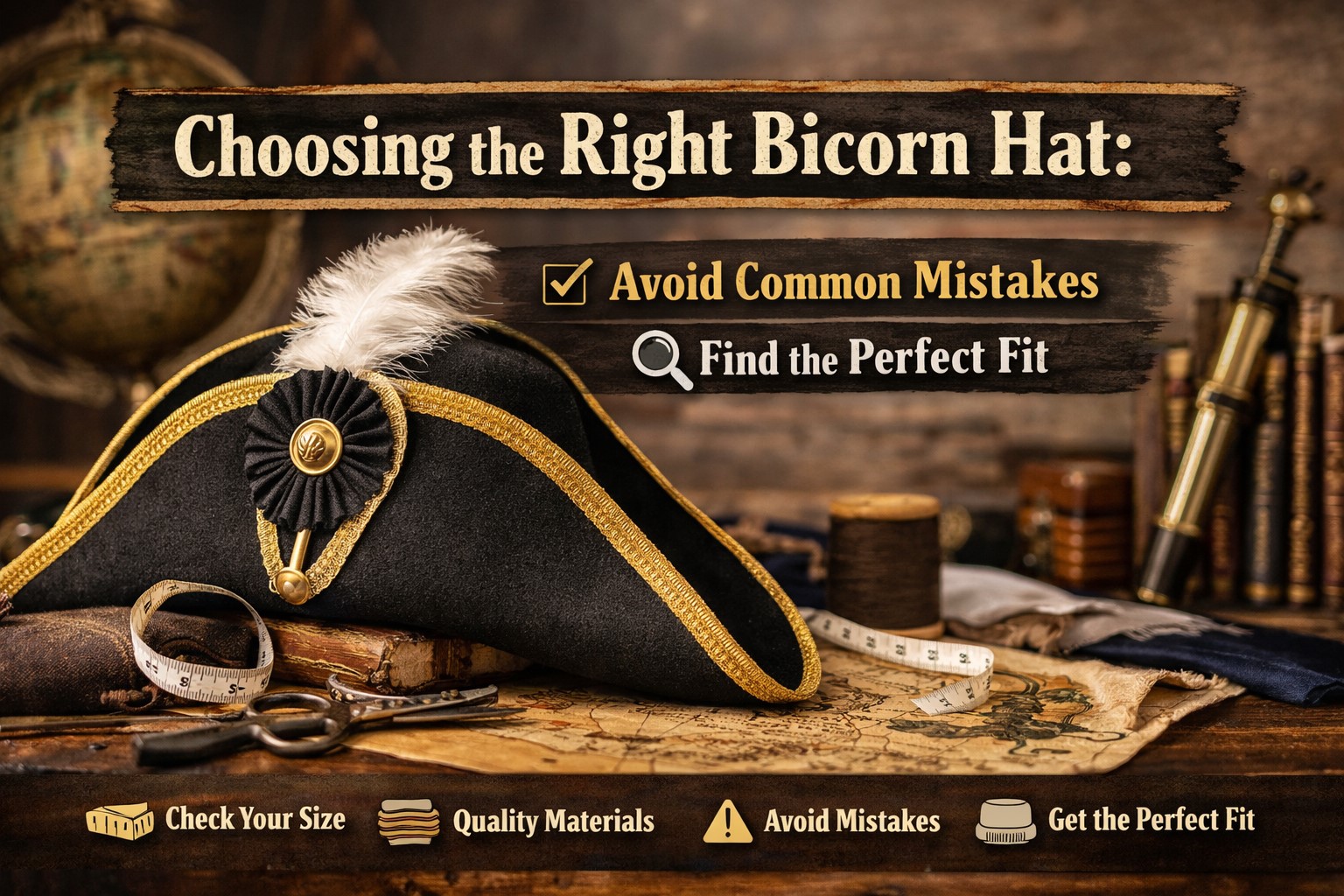
A bicorn hat is more than historical headwear. It shapes posture, strengthens presence, and communicates intention the moment it is worn. Whether used for ceremony, reenactment, formal uniform, or distinguished costume presentation, selecting the right bicorn is less about decoration and more about proportion, structure, and purpose.
Many buyers assume the decision is simple choose a size, choose a design, and wear it. In reality, most disappointment comes from preventable mistakes: incorrect fit, unstable structure, unsuitable material, or a style that does not match the intended use. A bicorn that tilts, slips, or loses its silhouette distracts rather than enhances.
This guide focuses on practical decision-making. Instead of repeating historical facts alone, it helps you evaluate what truly matters so your bicorn feels stable, comfortable, and visually correct from the first wear. If you want foundational background on bicorn styles and design evolution, the detailed guide from Rambo leather provides helpful context that supports the selection advice presented here – What Is Bicorn Hat? Complete Style & Buying Guide
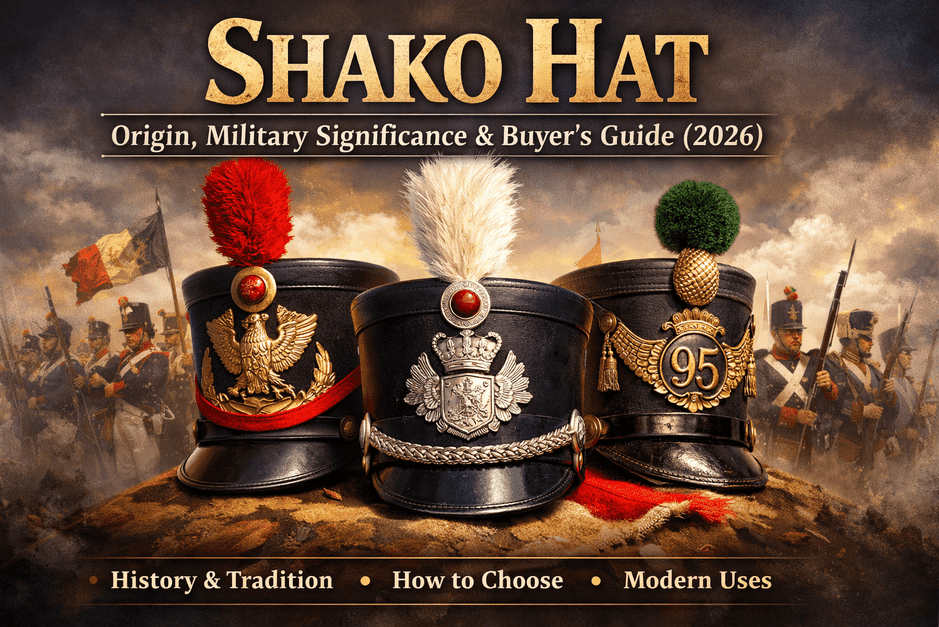
Across historical headwear from the formal Top Hat to military field styles like the Civil War Kepi and Shako Hat structure determines presence. The bicorn follows the same principle: when construction and fit align, the hat becomes a natural extension of the wearer.
How to Choose the Right Bicorn Hat
Fit Defines Comfort and Authority
A bicorn should rest with quiet stability. It should not squeeze, slide, or require adjustment throughout wear. Unlike softer headwear such as a Top Hat or other structured dress hats, a bicorn depends heavily on proportional balance rather than simple circumference.
A well-fitted bicorn:
- Rests lightly across the crown
- Maintains alignment when turning or nodding
- Does not press against ears or temples
- Frames the face naturally
When proportions are correct, the hat feels secure without tension. Discomfort is rarely a break-in issue it usually indicates incorrect sizing or structural mismatch.
Buyers often prioritize appearance first, but experienced wearers know that stability defines confidence. When the fit is right, posture improves naturally and the hat performs exactly as intended.
Orientation Should Reflect Real Use
The direction of the two corners significantly affects both appearance and practicality.
A fore-and-aft orientation creates a commanding, symmetrical profile ideal for formal presentation and ceremonial settings. This orientation emphasizes vertical balance and visual authority.
An athwart orientation (side-to-side) distributes weight more evenly and allows greater comfort during movement. It is often preferred for reenactment, performance, or extended wear.
Choosing orientation based on actual use prevents aesthetic mismatch and improves long-term satisfaction.
Material Determines Lifespan
Material quality is the foundation of durability. Across historical headwear traditions, structure always begins with fiber density and resilience.
High-density wool felt provides:
- Breathability during extended wear
- Resistance to structural fatigue
Lower-grade synthetic blends may initially resemble wool felt but typically lose rigidity and definition with repeated use. Buyers seeking long-term value benefit from prioritizing structural material over surface detail.
Construction Reveals Craftsmanship
True quality is revealed internally. External decoration may attract attention, but structural engineering determines performance.
Indicators of strong construction include:
- Reinforced internal framework maintaining corner definition
- Breathable lining for comfort and stability
When structure is correct, the hat maintains its form without effort. This consistency distinguishes a reliable bicorn from a decorative prop.
Common Buying Mistakes
Choosing a bicorn based only on appearance is the most frequent error. Many buyers focus on decoration or price without evaluating structure, which leads to hats that lose shape or sit incorrectly on the head.
Another common mistake is ignoring intended use. A bicorn suited for ceremonial display may feel uncomfortable during extended outdoor wear, while a reenactment-focused design may appear too plain for formal presentation.
Fit is also often misunderstood. Measuring head circumference alone does not guarantee stability. A bicorn must balance across the crown and temples, otherwise it will tilt or slip during movement.
Buyers sometimes assume all felt materials perform the same. Lower-density felt may look similar initially but tends to soften and deform over time. Prioritizing construction quality prevents premature replacement and ensures long-term satisfaction.
How to Select the Best Material
Material determines how well a bicorn maintains structure, comfort, and visual clarity over time.
High-density wool felt remains the most reliable choice for most buyers. It provides natural rigidity, breathability, and resilience, allowing the hat to hold sharp corner definition while remaining comfortable for extended wear.
Premium felt constructions are ideal for ceremonial or long-term ownership because they resist deformation and recover shape after storage. This balance of durability and authenticity makes wool felt the preferred material for both collectors and active users.
Synthetic blends may offer affordability and lighter weight, but they typically sacrifice structural integrity and lifespan. These materials are best suited for occasional or short-term use rather than regular wear.
When selecting material, think in terms of longevity and performance rather than surface appearance alone.
More Product Recommendations
When to Wear Each Type
Different bicorn styles serve different purposes, and selecting the right type depends on context rather than preference alone.
A formal structured bicorn is most appropriate for ceremonies, official presentations, and historically inspired formal attire. Its balanced silhouette communicates authority and composure in structured environments.
Practical felt bicorns designed for stability and durability are better suited for reenactment, outdoor events, and extended wear. These prioritize comfort and resilience while maintaining historical character.
Decoratively detailed bicorns with refined trim or ornamental elements are ideal for ceremonial leadership roles, theatrical presentation, or collector display. Their visual emphasis makes them best suited for controlled environments where preservation is important.
Choosing based on occasion ensures the bicorn supports both comfort and visual intention rather than competing with it.
How to Style a Bicorn Hat for Modern Wear
Styling a bicorn effectively means integrating it into overall presentation rather than treating it as an isolated statement piece.
Formal Styling
Pair with structured garments and restrained accessories. The hat should reinforce composure rather than compete for attention.
Ceremonial Context
Maintain level positioning. Stability enhances authority and visual balance.
Performance or Costume Styling
Ensure proportional harmony between headwear, shoulders, and outerwear. The bicorn should anchor the silhouette rather than dominate it.
Styling confidence comes from understanding the hat’s visual role it frames presence rather than overpowering it.
Comparison, Pros & Cons, and When to Wear Each Type
Advantages
- Strong formal presence with balanced structure
- Clear ceremonial identity
- Traditional silhouette suited to official presentation
Limitations
- Less flexible for extended movement
- Requires precise fit to maintain alignment
Best suited for
Formal ceremonies, historical interpretation and official uniform presentation.
Advantages
- Durable felt construction suitable for active wear
- Practical balance between authenticity and comfort
- Reliable shape retention during movement
Limitations
- Simpler visual profile compared to formal variants
- Designed for function rather than ornamentation
Best suited for
Reenactment, outdoor events, historically inspired presentation.
Advantages
- Distinguished detailing with structured authority
- Strong visual impact for ceremonial display
- Refined silhouette emphasizing status and presence
Limitations
- Decorative elements require careful handling
- Best suited to formal environments rather than active use
Best suited for
Ceremonial leadership roles, formal historical attire, collectors.
Key Trade-Offs to Consider:
Structure vs Comfort → Rigid hats hold shape longer
Authenticity vs Budget → Premium materials last significantly longer
Formality vs Versatility → Some styles suit only specific settings
FAQ
How tight should a bicorn hat feel?
It should feel secure without pressure. Tightness or slipping indicates incorrect proportions.
Can a bicorn be worn comfortably for long periods?
Yes. When fit and structure align, the hat remains stable and comfortable throughout extended wear.
Is custom sizing necessary?
For regular or ceremonial use, precise sizing improves comfort and longevity. Occasional wear may not require it.
How should a bicorn be stored?
Store upside down on a stable support in a dry environment to preserve structure.
What is the most common buying mistake?
Choosing based on decoration rather than evaluating fit and construction.
Does price always reflect quality?
No. Structural integrity and material density determine performance more than ornamentation.
Find Your Perfect Bicorn Today
Choose a bicorn that fits correctly, holds its structure, and matches your purpose. Invest in craftsmanship designed to perform not just impress.