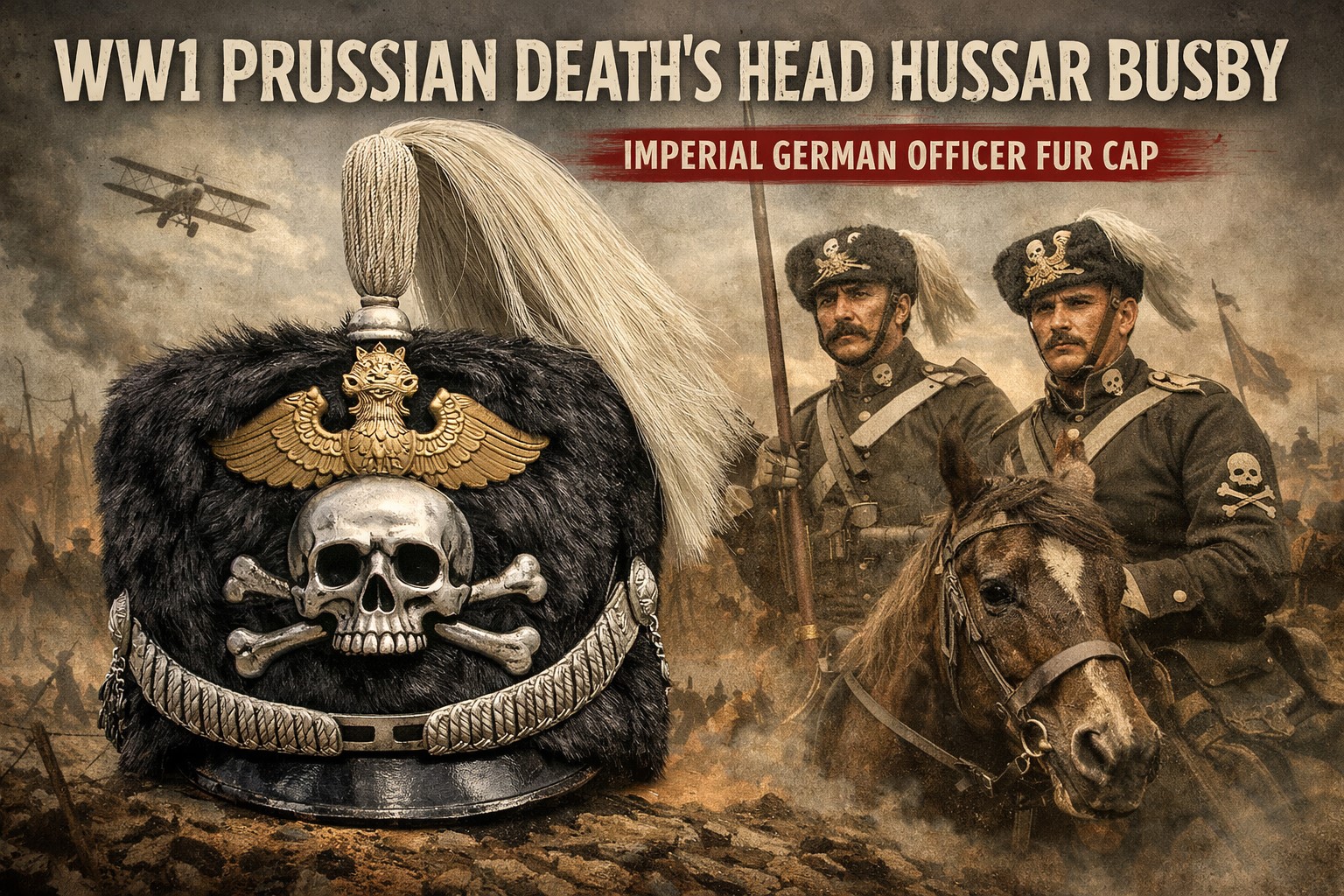
The WW1 Prussian Death’s Head Hussar Busby is more than a military hat — it is a powerful emblem of elite cavalry heritage, battlefield distinction, and ceremonial prestige. Worn by the legendary Hussar regiments of the Kingdom of Prussia, this striking fur cap crowned with the iconic Totenkopf (Death’s Head) symbol became a mark of fearless cavalry tradition and aristocratic military culture.
Originating in 18th and 19th century European warfare, the busby was designed not only for visual authority but also for regimental identity. The tall fur body created an imposing silhouette, while the skull insignia signified loyalty, sacrifice, and unwavering resolve.
Military historians and reenactment uniform specialists consider the Totenkopfhusaren busby one of the most recognizable cavalry headgear designs in European military history.
Today, collectors, reenactors, historians, and military fashion enthusiasts admire the Prussian Hussar Busby for its craftsmanship, symbolism, and unmistakable presence.
What Is a WW1 Prussian Death’s Head Hussar Busby?
The Death’s Head Hussars (Totenkopfhusaren) were elite light cavalry regiments within the Prussian Army. Their uniform reflected both elegance and intimidation, and the busby was central to that image.
This officer fur cap typically features:
- Tall cylindrical fur body (traditionally black)
- Metallic Totenkopf skull-and-crossbones badge
- Cloth bag draped to one side
- Regiment-specific cockade and plume detailing
The skull insignia symbolized fearlessness and loyalty. Unlike standard infantry headwear, the busby was reserved for mounted cavalry units, giving it a distinct place in military fashion history.
In comparison, structured Militaria Caps later became common across various European branches for practicality, while cavalry traditions preserved more dramatic headgear like the busby.
The Busby in Imperial German Military Headgear History
The WW1 Prussian Death’s Head Hussar Busby is part of a broader category of Imperial German military headgear. While infantry commonly wore structured German caps and pickelhaube helmets, cavalry units preserved traditional fur busby designs to maintain regimental identity and battlefield visibility.
This connection places the busby within the evolution of German military caps used across different branches of the Imperial German Army, making it an important piece of WW1 German cavalry uniform headgear history.
How to Choose the Right WW1 Prussian Death’s Head Hussar Busby
Selecting a high-quality reproduction requires attention to detail and structure.
1. Accurate Totenkopf Emblem
The skull insignia should reflect WW1-era proportions and detailing. Metal finish and placement must be precise.
2. Premium Fur & Structural Integrity
Look for:
- Dense fur (real or premium faux)
- Strong internal frame to maintain height
- Reinforced stitching
- Proper interior lining
The cylindrical silhouette must remain upright and symmetrical.
3. Officer-Level Finishing
As an officer fur cap, detailing should appear refined, polished, and historically accurate.
4. Regiment Variations
Different Hussar regiments had variations in cockade colors and cloth bag styling. Accuracy enhances authenticity and collector value.
Related Historical Military Headwear Styles
If you admire the structure and historic authority of the busby, you may also appreciate these related styles:
Busby vs Shako vs Kepi – Quick Comparison
| Feature |
Busby |
Shako |
Kepi |
| Material |
Fur |
Felt / Leather |
Cloth |
| Primary Use |
Cavalry |
Infantry |
Officers / Infantry |
| Era |
18th Century – WW1 |
18th – 19th Century |
19th Century |
| Visual Style |
Tall, Fur, Dramatic |
Tall, Structured |
Compact, Practical |
How to Style a WW1 Prussian Death’s Head Hussar Busby
Full Cavalry Officer Uniform
Pair it with:
- Fitted Prussian cavalry officer tunic
- Tailored breeches
- Riding boots
- Period-accurate belt and saber
The tall fur body complements structured tailoring and enhances vertical authority.
Maintain Proportion
Because of its height, the busby must be worn with structured garments. Loose modern clothing disrupts authenticity. Compared to compact designs such as the Civil War Kepi, the Hussar busby creates a bold vertical silhouette.
When to Wear a WW1 Prussian Death’s Head Hussar Busby
This Imperial German officer fur cap is best suited for:
- Historical reenactments
- Military exhibitions
- Collector showcases
- Museum displays
- Period film productions
- Historical photography sessions
Collectors building premium military collections often display it alongside structured military caps to represent different branches and ranks within military history.
Why Collectors and Reenactors Choose This Busby
- Authentic Prussian Hussar officer styling
- Historically accurate Totenkopf insignia
- Premium reproduction craftsmanship
- Essential piece for WW1 German cavalry uniform completion
FAQ’s
- Q1: Is the Death’s Head symbol historically accurate?
- Yes. The Totenkopf was historically worn by specific Prussian Hussar regiments as a regimental emblem.
- Q2: Is this the same as a shako?
- No. While similar in height, the shako is typically rigid and structured, whereas the busby is fur-based.
- Q3: Can this be worn for reenactments?
- Absolutely — provided it meets historical accuracy standards for your event.
- Q4: Is it suitable for collectors?
- Yes. It is considered a premium centerpiece item in many military collections.
- Q5: Was the busby used only in WW1?
- No. The busby originated in 18th and 19th century European cavalry traditions and continued ceremonial and limited field use into WW1 depending on regiment traditions.
Discover the Elegance of the Prussian Death’s Head Hussar Busby
Elevate your collection with this stunning piece of military history. Whether you are a collector, reenactor, or historical fashion enthusiast, this Prussian Hussar officer hat reproduction represents craftsmanship, heritage, and timeless military tradition.
Shop now and add authentic historical authority to your collection.